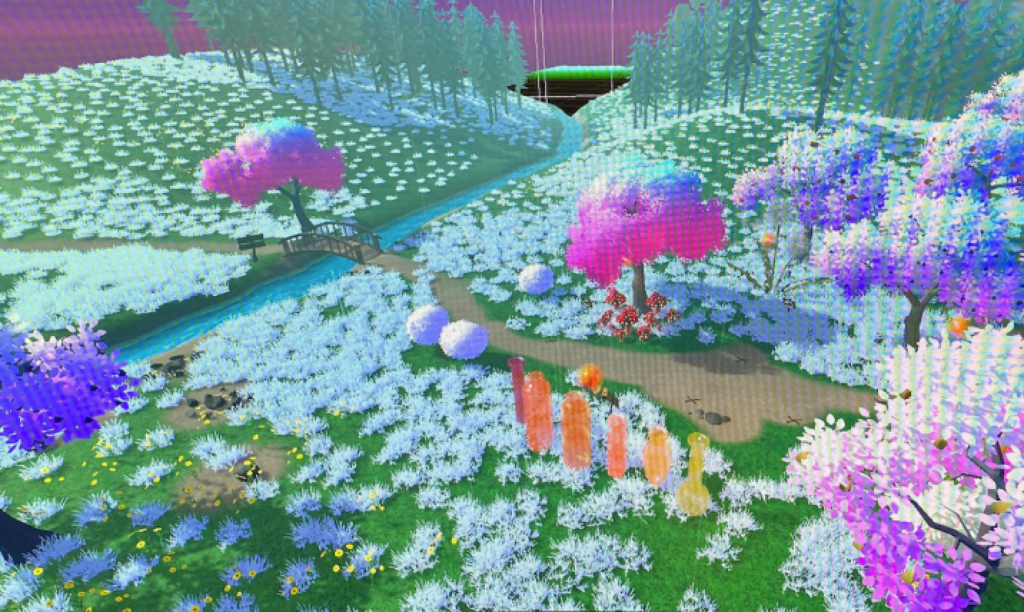
Last week I managed to speak to two experts, Sion Fletcher from Technical Resources at CSM and Annie Wan, the course leader of the BA VR course at LCC. They were extremely helpful and were both optimistic about my research goals from my proposal, and said that it was definitely achievable to learn how to use the VR software to create an intervention and test it for the August deadline.

SION MEETING NOTES
Basics:
- look into interaction design
- narrow the topic down, tackle something smaller than just mindfulness
- breathing exercise VR – breath in white smoke and breathing out black smoke (maybe monitoring breathing with microphones??)
- room J206 – csm
VR Technical stuff:
- focus on vr technically
- game engines to use are unity and unreal (unity is easier to use), the physics system is the same – physex for both AND THEYRE FREE TO USE
- Do unity courses to get an idea, go through fundamental courses
- play around with an actual headset
- stuff you need for vr is just the same as any other monitor
- navigation, tracking of headsets, interaction between user and game
- libraries of free software on unity physics system – particle systems – rendering engines -materials
Biometrics:
- arduino sensor heart rate
- serial port signals in unreal
- sketch out certain ideas about things i want to create
- get ideas from the tools you use as much as the other way around
- don’t fixate on an intervention just yet, give yourself time to play around
Possibility of MR:
- hololens is an option BUT MR isn’t as cool as VR
- don’t be limited by MR, VR is a better option for idea
ANNIE MEETING NOTES:
- loads of info/research on vr and meditation
- VR meditation does exist
- maybe a calm environment with trees and wind?
- create outer space environment that doesn’t exist (INTERESTING)
- bringing people away from reality makes people calm
- am i heading in a humanities research? look into comparative research
- real world vs vr meditation environment
- technically IT IS feasible and there are similar applications that exist, I need to identify the gap in the market (possibly bio-driven VR?)
- oxford vr department (therapy) does a lot of research into this
- not data science project, user experience research project
- unity guided meditation exists, have a look at it
- your ultimate goal is humanity, not technology
- sensory inputs/data is an add on, not the main focus
- there’s different levels of meditation/mindfulness
- why do i have to use VR? Identify the WHY
- Am I filling a gap in the market? or gap in research?
USEFUL LINKS SHARED:
https://www.oculus.com/experiences/gear-vr/929143807179080/
https://www.wired.com/story/virtual-reality-therapeutic-benefits-travel-socializing-exercise/
https://www.oculus.com/experiences/gear-vr/929143807179080/
NEXT WEEK’S TO DO:
- research into market competitors that already exist, make a SWOT table
- get in touch with smaller VR companies based in the UK
- learn how to USE unity, apparently it takes 2/3 weeks to learn how to make a basic game/understand the interface
- get in touch with VR collaborator, perhaps student from LCC
- get in touch with Arduino collaborator, see if something other than heart rate might be a good option or whether it is needed at all – also see if there’s a way to use Unity and Arduino together.
- Replan project schedule in accordance to Unit 3 study guide
https://www.fastcompany.com/3058756/why-virtual-reality-will-change-design-forever