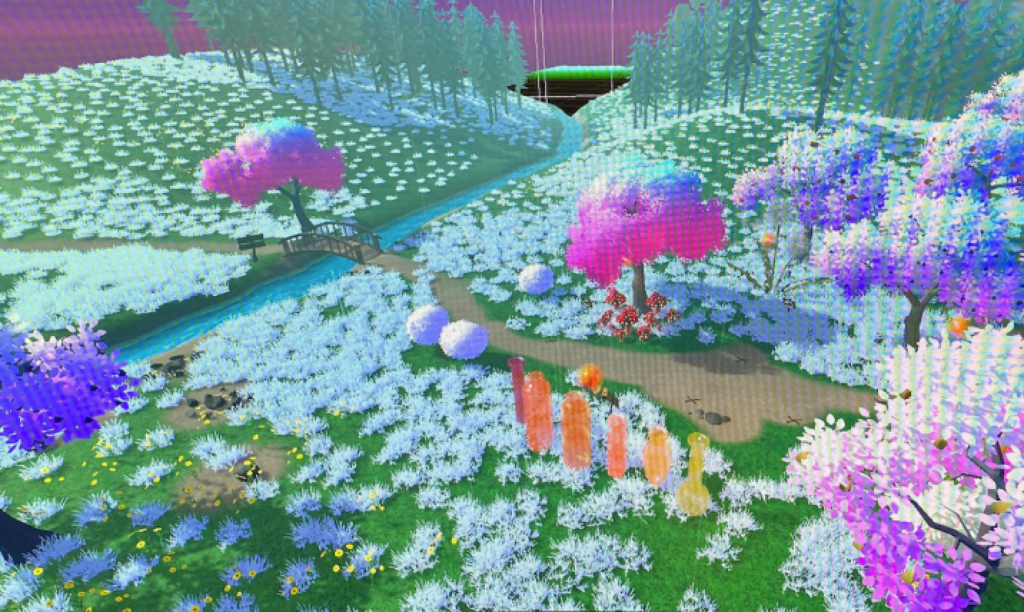
In answering my research question of how impressionist theory can inform naturalistic design within stylised Virtual Reality – based mindfulness environments, I was able to conduct an intervention that led to the results of impressionist design showing positive effects on VR- based mindfulness environments, whereby 83% of participants found the experience to have improved their mood in comparison to the way they felt prior.
Alongside the gaining of this new knowledge, I also received extremely valuable feedback on the experience that opened the doors for further avenues of research and potentially further iterations of the intervention that could be tested.
Primarily, it is important to consider for future iterations that impressionist design is highly subjective, and as the name implies, the impression of the creator (myself) of what the design (the VR world) should be. Thus, it could be extremely beneficial to explore individual impressions of a mindfulness space that is created by the user themselves, in order to cater to each end- user. Perhaps future versions of the experience could include a world- building phase where each user could create their own mindfulness space. A case study I looked at for considering this possibility were the SIMS video games, where the user essentially builds the world around them. This would not only allow the mindfulness experience to be truly personalised, but also give end- users the freedom to choose a space in which they feel comfortable in (eg. forest, garden, library, fireplace, bedroom, etc.) and be able to feel a sense of comfort knowing that the space is one that is uniquely for them.
Another iteration of the intervention as mentioned in previous findings could include harnessing the in- built technology within the HTC VIVE Pro VR systems, whereby the inclusion of haptic and sound technology could help to increase the range of exercises that the experience provides. A key piece of recurring feedback in my intervention was regarding the limitations of mindfulness solely through breathing exercises – as not everyone is able to be mindful only through breathing techniques. Looking back, I also realised that I myself need a secondary form of mindfulness, whether it be through painting, or playing an instrument, or speaking to a friend.
A case study I looked at through exploration on the Steam VR Platform was TiltBrush by Google, where the haptics of the controller are used to aid in painting/sketching/writing on a canvas or a whiteboard. When experiencing the platform in VR myself, I was really impressed by the vibrations on the controller (haptics) when I changed from a pen to a marker on a (virtual) whiteboard, or when I picked the string of a (virtual) guitar, namely in how realistic the vibrations were without being overbearing or startling in any way.

As art therapy has already shown in research to have extremely promising results within meditation (Source: Gambis 2015), including a type of activity where the end- user is able to be creative within the experience would be an extremely beneficial addition to the next iteration of the intervention.
Furthermore, I realised that while impressionist theory had been the most widely- studied fine art practice in the field of neuroscience (thus having a significantly large research pool), it would also be interesting to observe VR- mindfulness spaces in different art styles, such as surrealism, cubism, etc. and analyse the results.
Lastly, it is also important to consider logistical reiterations moving forward, such as having the experience in different languages, catering to the needs of a neurodivergent end- users, as well as general accessibility requirements of certain users (eg. some may require an audio guide, some may want the breathing exercises to last more than 3 repetitions, some may want a variety of (more and less) exercises that are time- sensitive, etc). As I have placed so much emphasis about wanting mindfulness to be accessible and for end- users to have agency on their mental- wellbeing throughout my intervention, this would definitely be a crucial next step for me to follow- through on my project aims for the future.