Apart from my research and development stakeholders, I also had 23 participant stakeholders who tested my intervention.
Although my project is accessible to viewers of any age, my target stakeholder demographic was 18-35 year- olds who already have either some or frequent experience with traditional mindfulness exercises, including the use of mobile meditation apps.
My intervention stakeholder group consisted of coursemates, creative professionals in my network, and external experts within the VR, Film and Television industries aged between 18-50.
(Extract from Research Report) In studies conducted by Limina Immersive, the demographic demonstrating the biggest interest in purchasing a VR headset in the UK were 18- 24 year olds, and the age group found most likely to own a headset was 35-44 (Allen 2021). Despite an even age distribution between downloads of popular meditation applications (Curry 2021), studies show that young adults in the UK (18-30) are the group most aware of daily mindfulness practices and have the highest engagement rates of regular practice (Simonsson et al 2020).
Prior to starting my intervention tests, I ensured that health and safety measures would be enforced, not only due to COVID still posing a big health threat, but as well as because most people had not used a VR headset before and thus their lack of spacial awareness could lead to injury/bodily harm.
THE TESTING SPACE:
The testing space was in Learning Zone A in the library, a private room that had enough space for the VR base stations/spatial sensors as well as could ensure that the participant had sufficient space to move around naturally.

HEALTH AND SAFETY:
Prior to participation, all testers had to fill out a COVID- health declaration and safety waiver: https://forms.gle/4nSDscurKLLvrQFd7
A UAL risk assessment was also completed and handed to the librarian prior to testing.
The UK’s guidelines for social distancing were followed, with only one participant tested in each 15 minute timeslot. Moreover, all equipment was wiped down and sanitised in the morning and before and after each use, and participants (and myself) were regularly using hand sanitiser before and after having touched any of the equipment.
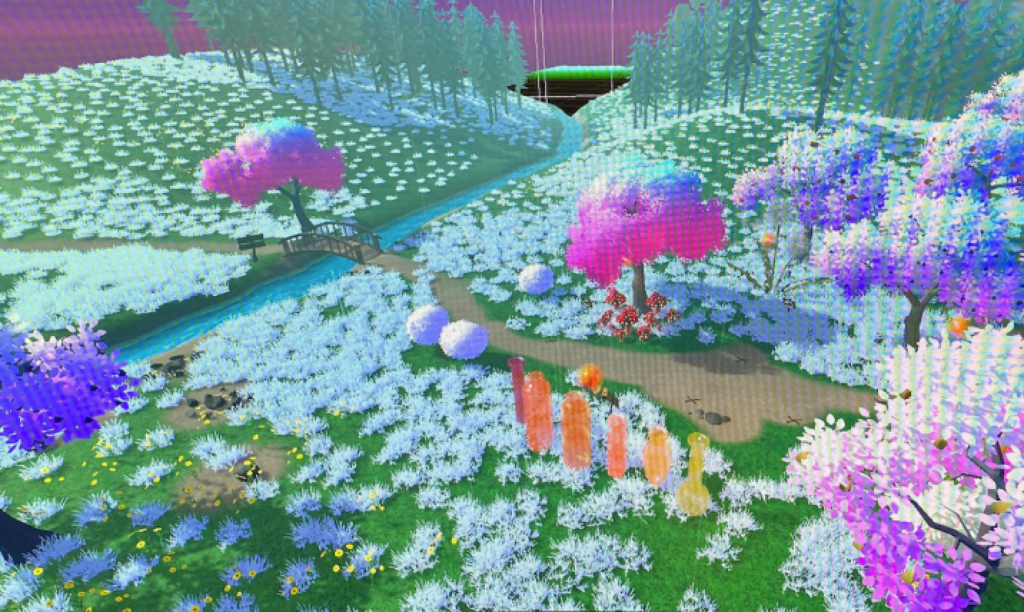
The first five minutes of each session was also spent familiarising each participant with the VR space and the use of teleportation, and making them aware of the risks such as walking into walls, etc. This was done through the landing page of the experience, with the actual experience being on the other side of the bridge. This not only allowed for participants to be able to practice and familiarise themselves with the space and teleportation, but also helped them to adjust to the narrative of the experience.
This seemed to really help them adjust to the world and how to move around within it.